"Spring"
Welcome to the page which details the creative journey of 4 sound production honors degree students who band together to utilise their strengths and capabilities in building a sonic interpretation of the short film "Spring" by Blender.
Meet the crew
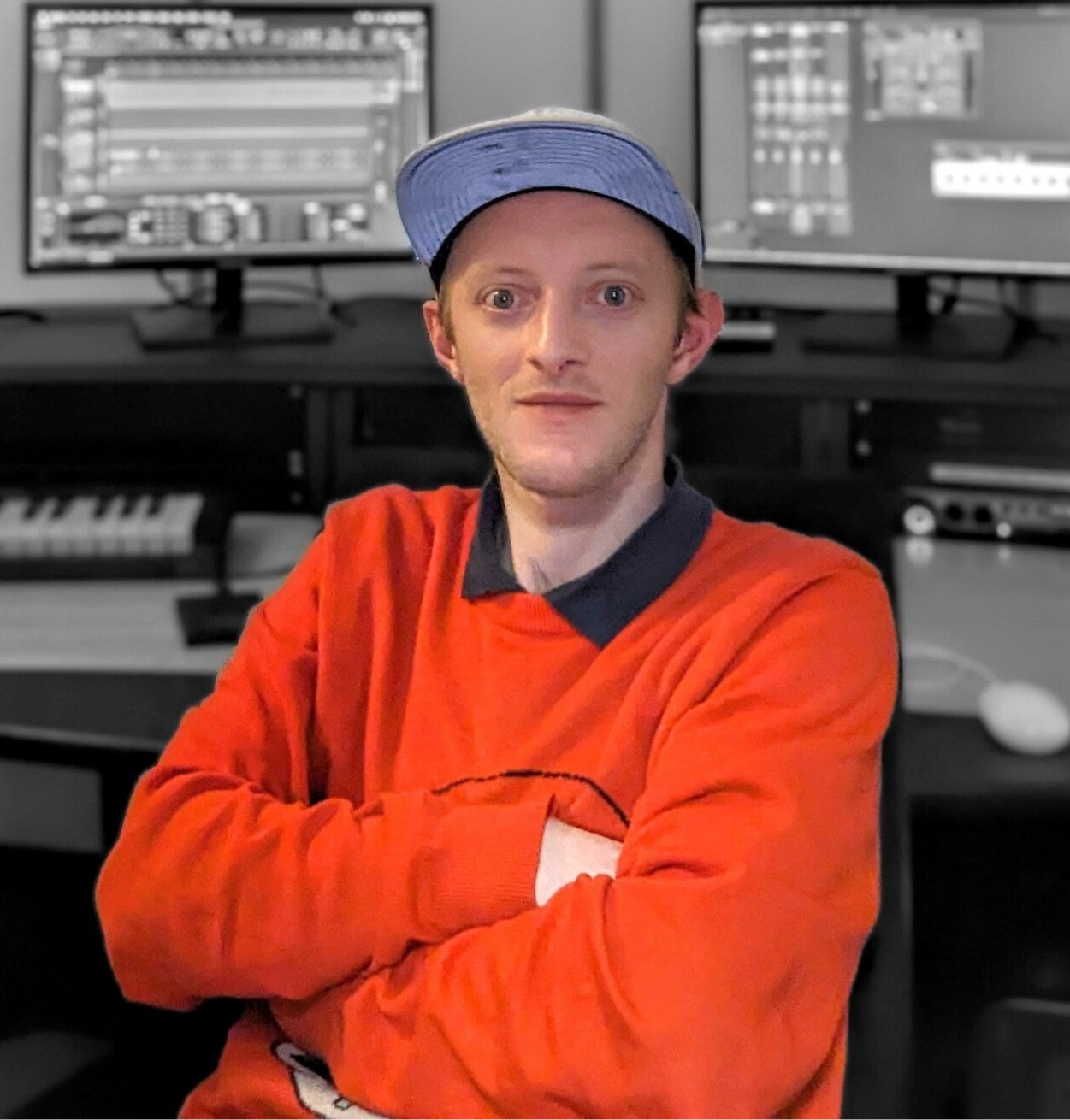
Allan Oliver - Composer and Administration management.
Utilising my skills and strengths in the project to create a composition full of wonder and intensity, enhancing the emotional and immersive engagement for anyone who views the final piece. Helping to keep the crew in the together with constant communication and role allocation.
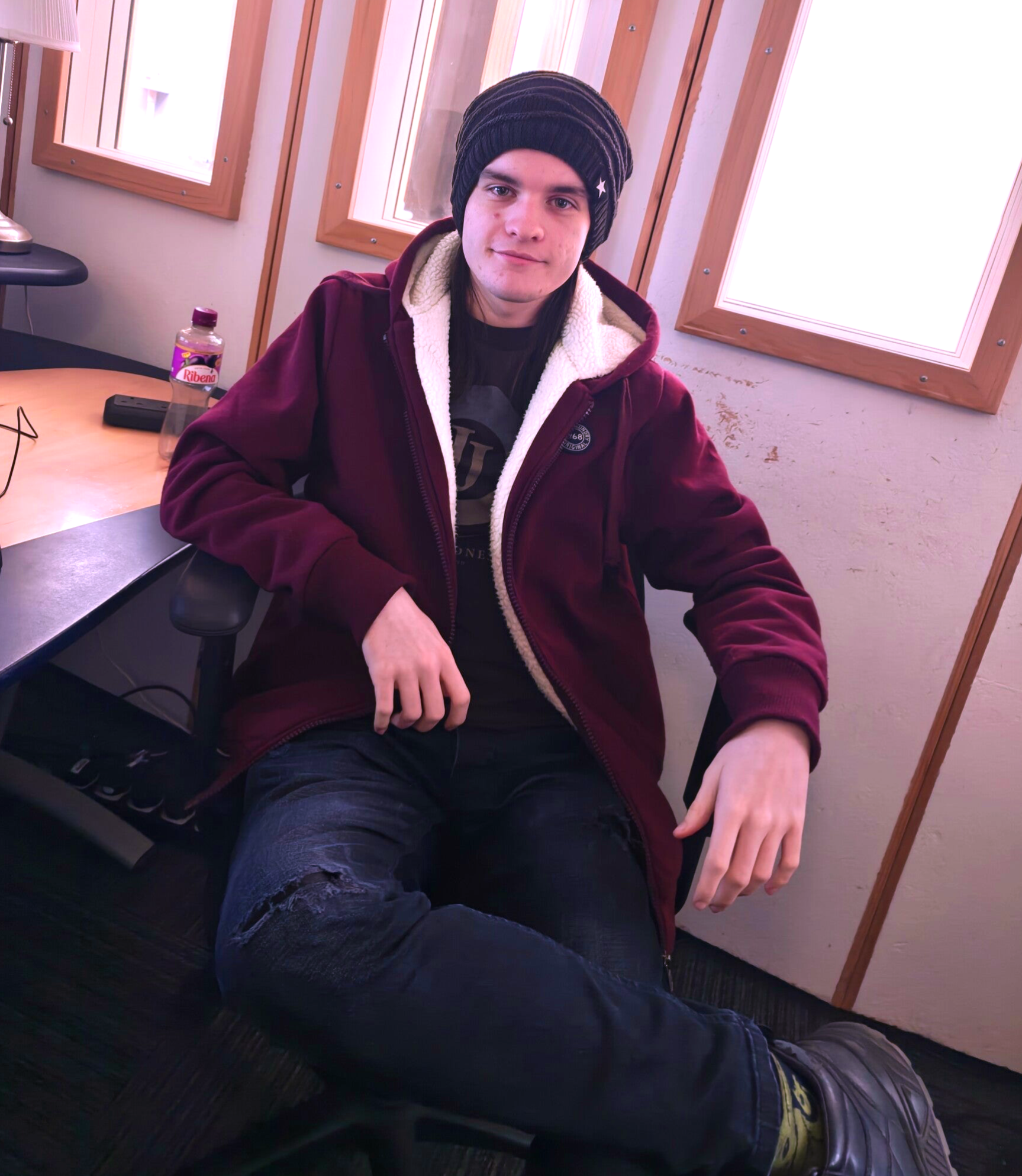
Cian Campbell - Foley artist and Dolby Atmos mixing engineer.
Through an extensive creative effort and comprehensive knowledge and experience in audio recording for several years, Cian takes Foley artistry to the next level for this project by constantly thinking outside the box and utilising Dolby Atmos mixing techniques to create an immersive experience rivalled only by other industry standard contemporary practice.
Fionbharr Marshall - SFX producer and administrative advisor
With an advanced knowledge in synthesis and sampling within Ableton Live, an eye and ear for intuitive creativity, Fionbharr enlarges the moments of the piece where intensity is key and the audio blends alongside the visuals with it's narrative power. The SFX is an element which could tell the story on its own and through consistent communication with the rest of the production crew aswell as important, informative input into the directions to be taken regarding the sound design, everyones vision of the work pieces together blissfully.
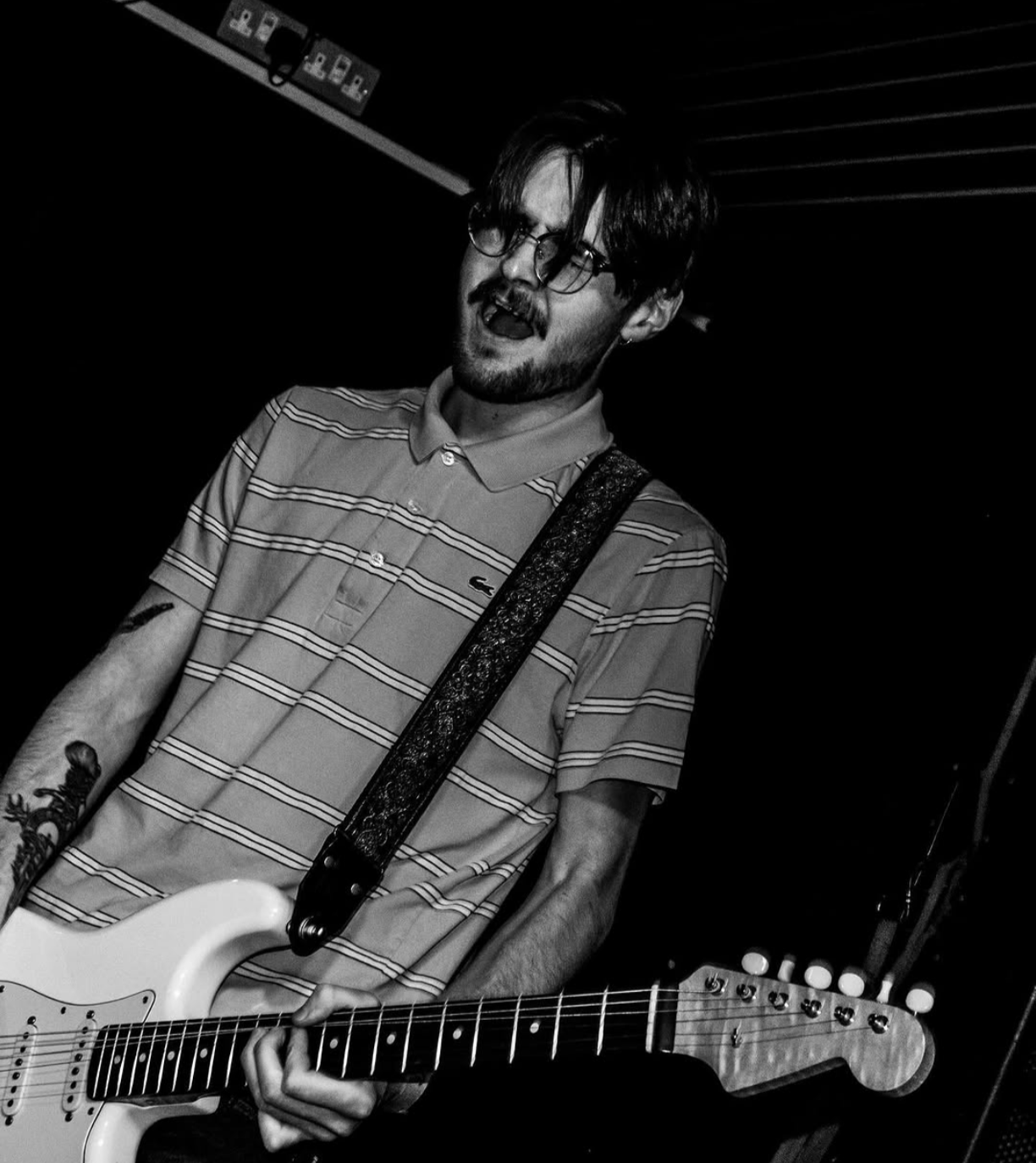
Charlie Beaton - Ambience and compositional details
Without ambience, any sound design project feels somewhat empty. Charlie creates a soundscape that can place the audience inside the scene with their eyes closed and it is through the lustrous soundscape in the short film that we can really feel ourselves share the thoughts and emotions of being in the protagonists shoes. Additionally, his input regarding the optimal key and chord progressions for the composition that would fit the film were incredibly invaluable to giving the soundtrack it's inspiring grandeur.
Initial group process
In the initial stages of the production for this project, the crew got together and watched the clip in its entirety. Taking notes and discussing specific themes, moods and emotions we interpreted the piece to convey. This led to a spotting session where markers were left in specific moments in a ProTools session where audio elements such as Foley, SFX cues, Music instrumentation and Environmental ambience were agreed by all parties. After this, we came to an agreement on who should be allocated to which particular element based on our biggest strengths and skills, with one member of the group to be a set project manager to deal with all administrative content. I offered myself for this role and thus began to create some documentation to assist us in remaining on track for our work.
| Team member | Roles and responsibilities. |
|---|---|
| Allan Oliver | Composer and administration manager |
| Cian Campbell | Foley and Dolby Atmos mixing |
| Fionbharr Marshall | SFX and some administrative duties. |
| Charlie Beaton | Ambience and key compositional input. |
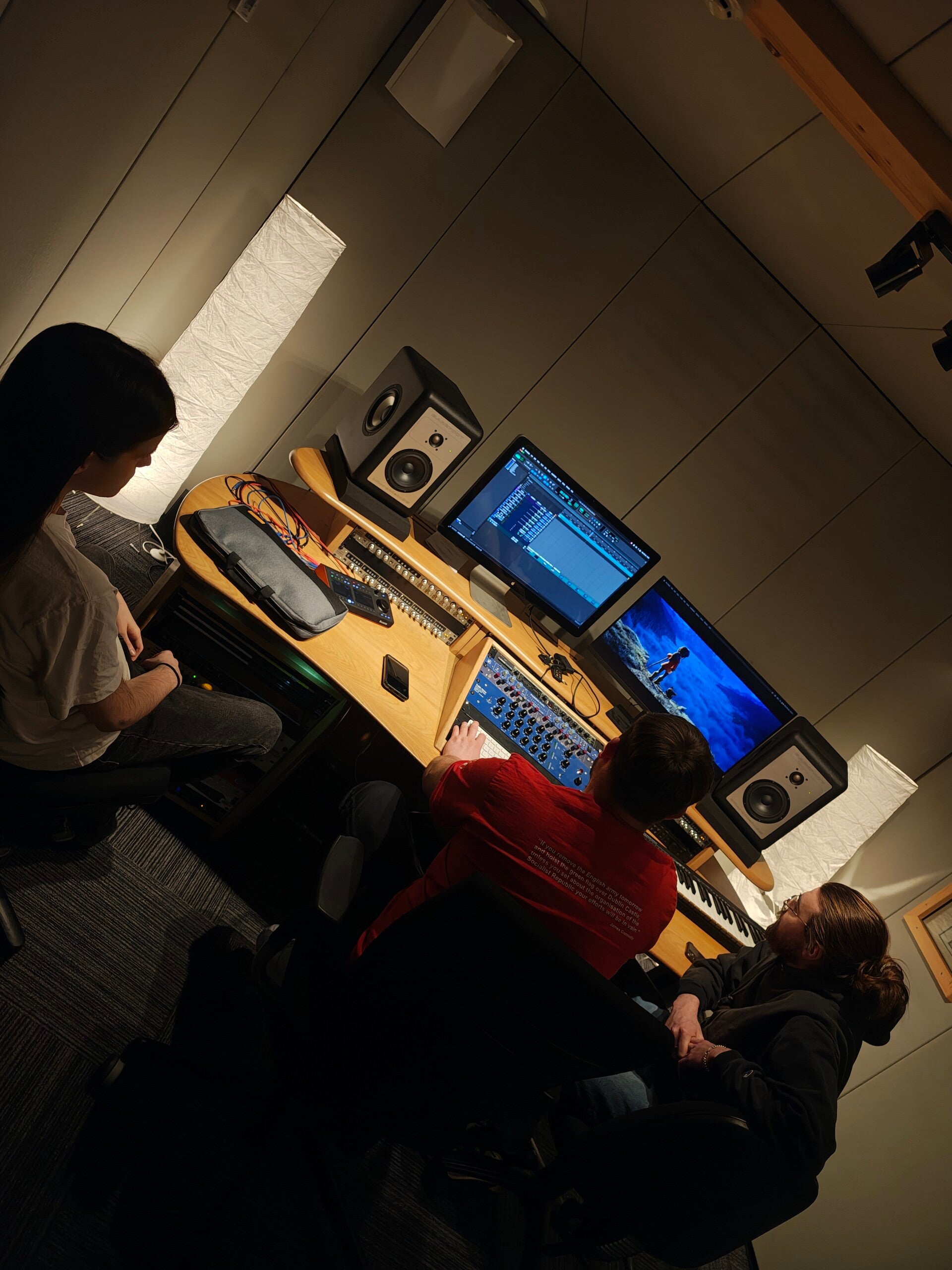
Team spotting session, noting our specific design details.
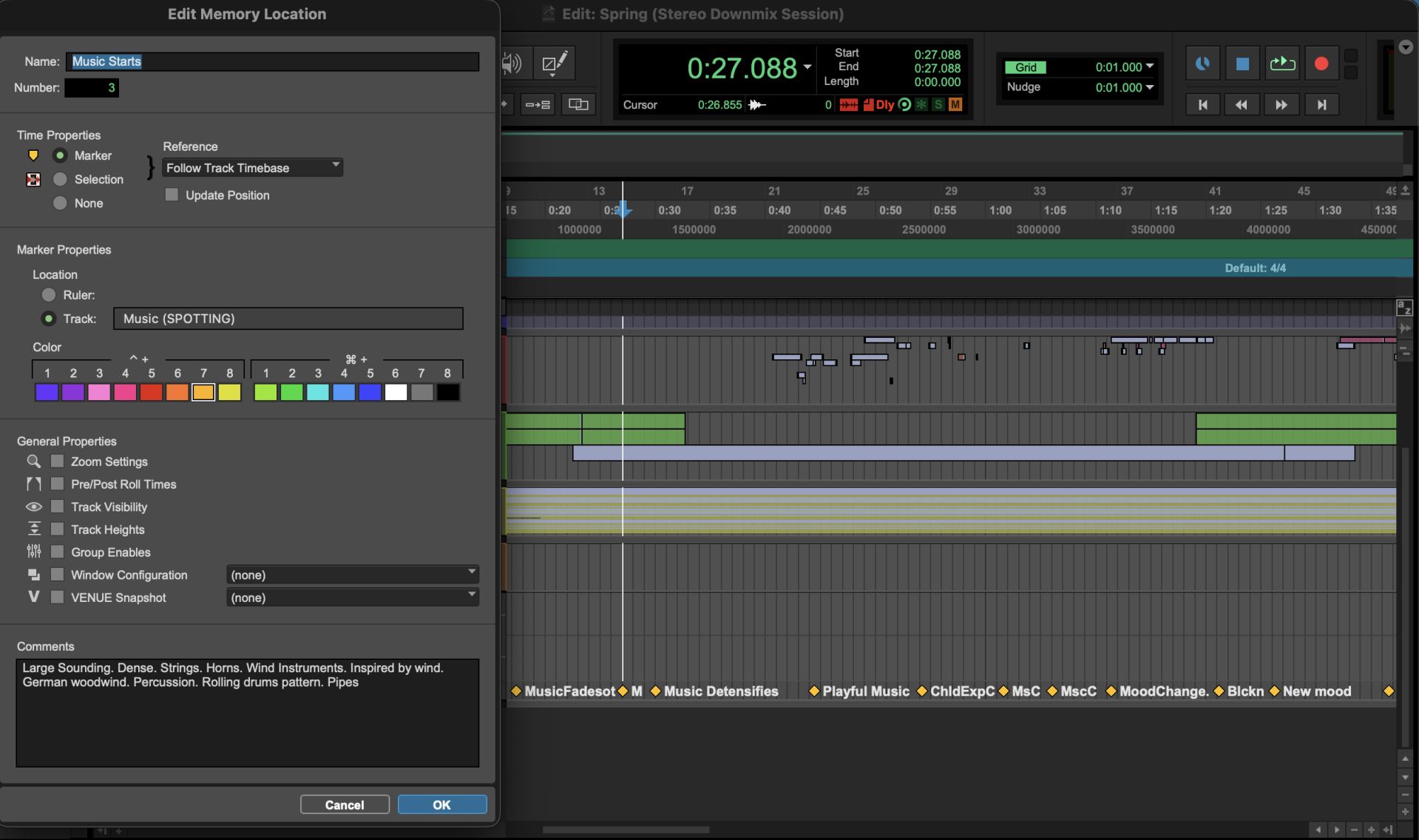
Team spotting session comments, noting our specific design details.
Orchestral Score
During the spotting session, the team decided that the project should contain an orchestral score to compliment and enhance it's majestic visuals. There were two main inspirations Allan had for the choice of instrumentation. For the open valley and mountain tops, a fanfare type of arrangement with Brass instrumentation and Uilean Pipes, inspired by the scene of the munros in the movie Braveheart was implemented to begin the composition. As the camera pans down to the young protagonist and her canine companion, a choir begins to sing alongside an ensemble of strings from the Berlin Symphony Orchestra instrument on the Sine Player plugin. A short flute motif for the dog is also added which is planned to be used later in the piece to convey a sense of joy and relief. The team decided we should use percussive glockenspiel hits for the sound of the creatures bones blended with a layer of SFX, so this was also added into the composition through the same orchestra plugin.
In the first draft there was an additional Irish harp progression as the camera pans to the foggy valley, however, at the middle stage of the project where we displayed the progress to the director, we all agreed together that a change was required to convey the sense of dread that accompanied the mystery held by the uncharted territory deep below. To prevent the instrumentation from sounding too artificial and clearly like MIDI, significant time was spent drawing automation on the clip envelope to give the audio a much more natural, human performance.
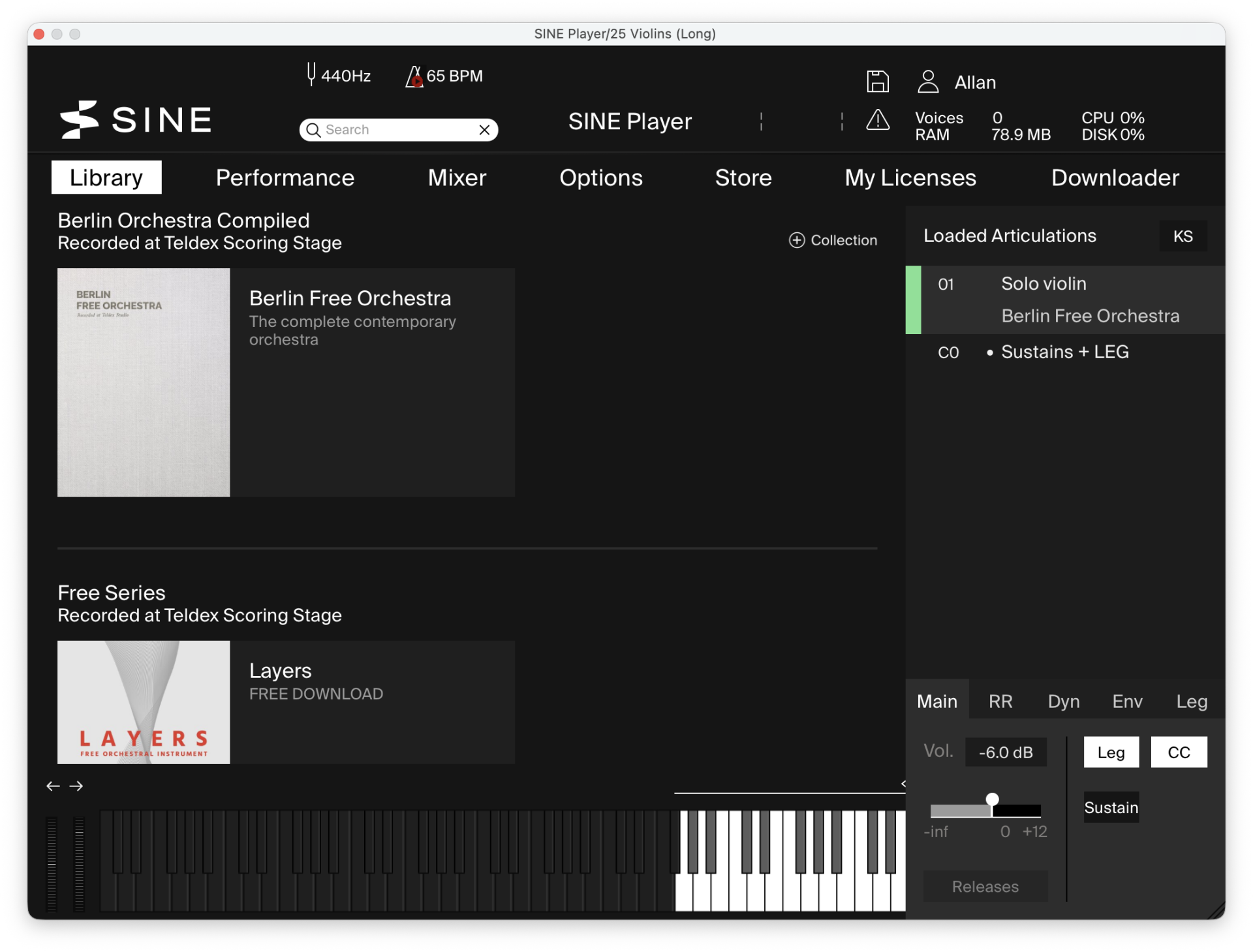
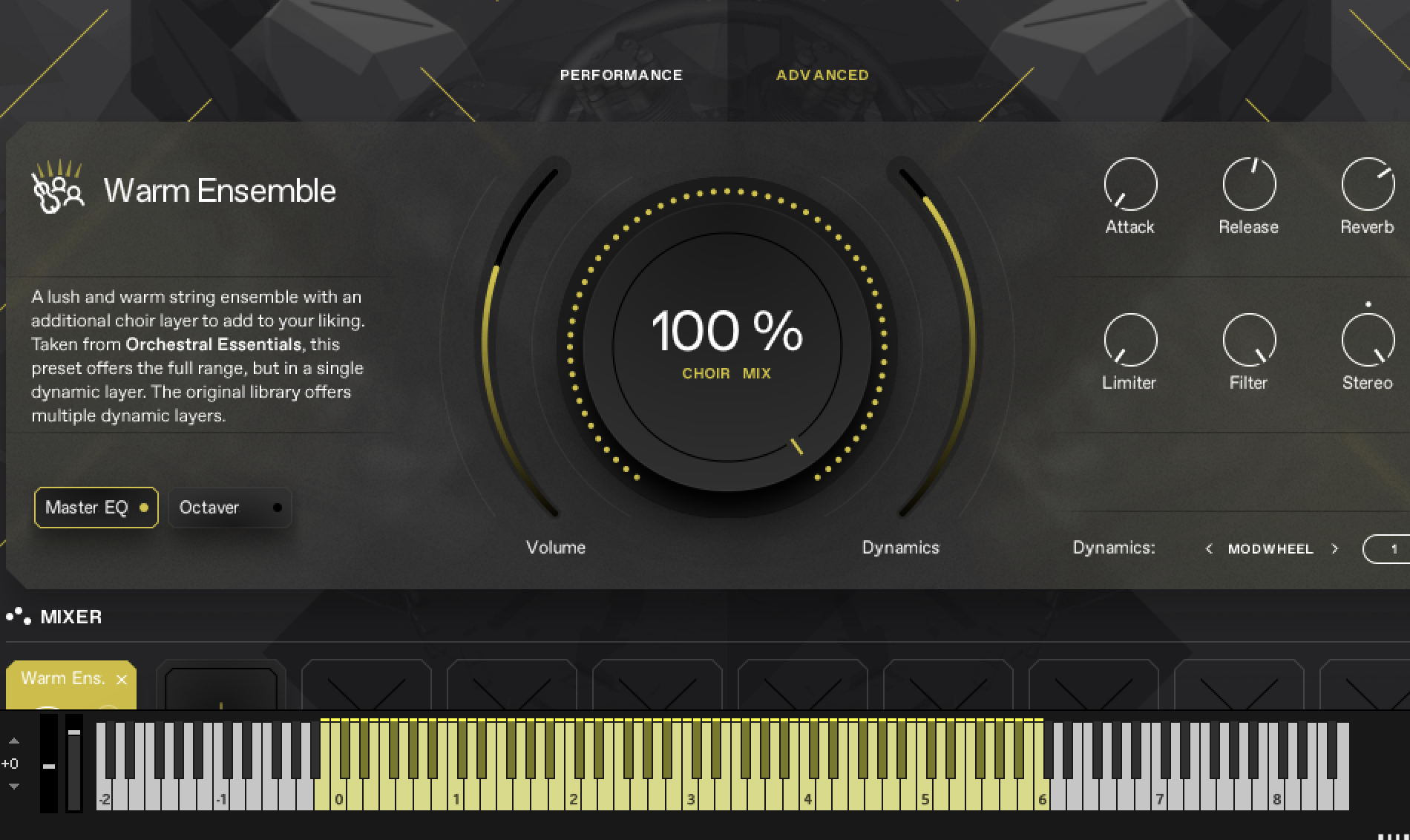
Plugins used for orchestral score.
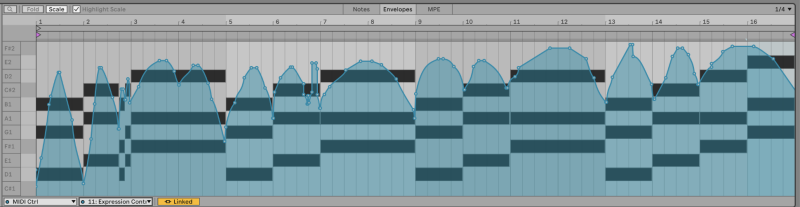
Expression, breath control and modulation automation for more human feel to music.
As the protagonist traverses the dark valley and eventually meets the enormous tree creature/monster, french horns layered with other brass instruments such as the tuba are introduced, which are inspired by the cue of the orc armies from Lord of the Rings. This decision was made to reinforce the potential threat and scale of the creature, grounding the scene in a sense of impending danger with the low brass timbres representing the monsters enigmatic existence.
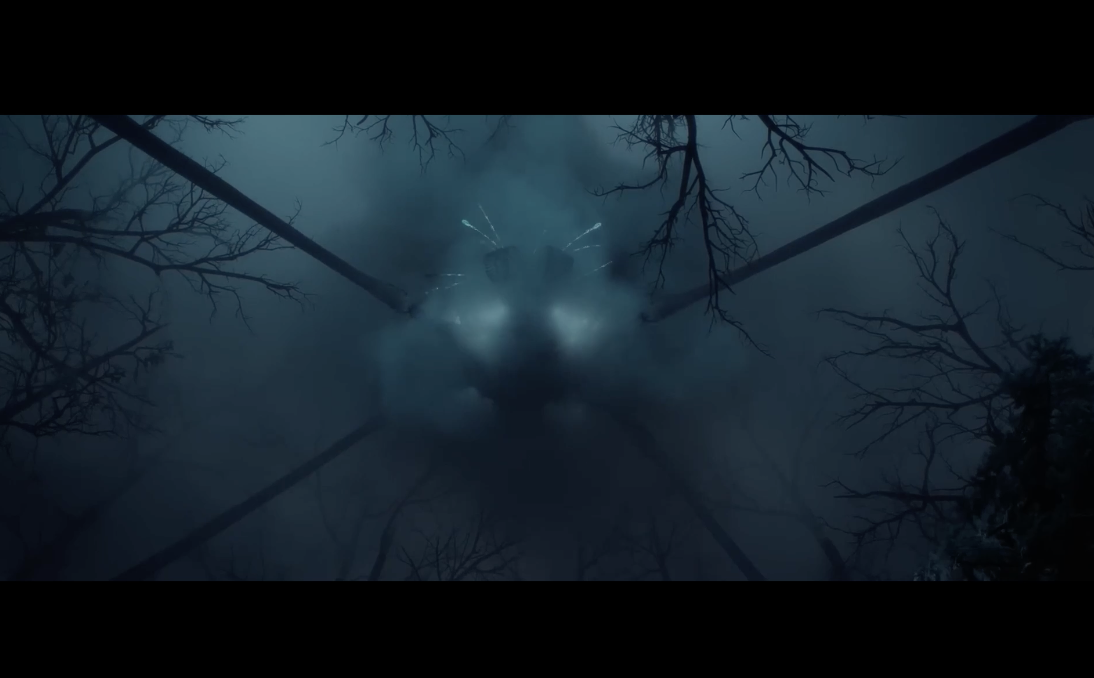
Snap of creature where brass motif is introduced.
The part of the composition which was most notably effective was the Uilleann pipes at the beginning of the soundtrack as the camera introduces the mountaintops. This was particularly impactful because Allan has never previously used them in a production before so his exploration of its unique articulations supplied with the Spitfire LABS plugin, layered alongside horns and other orchestral instrumentation results in a majestic sound that enhances the scene and evokes a sense of brightness and joy that accompanies the sunny landscapes on screen.
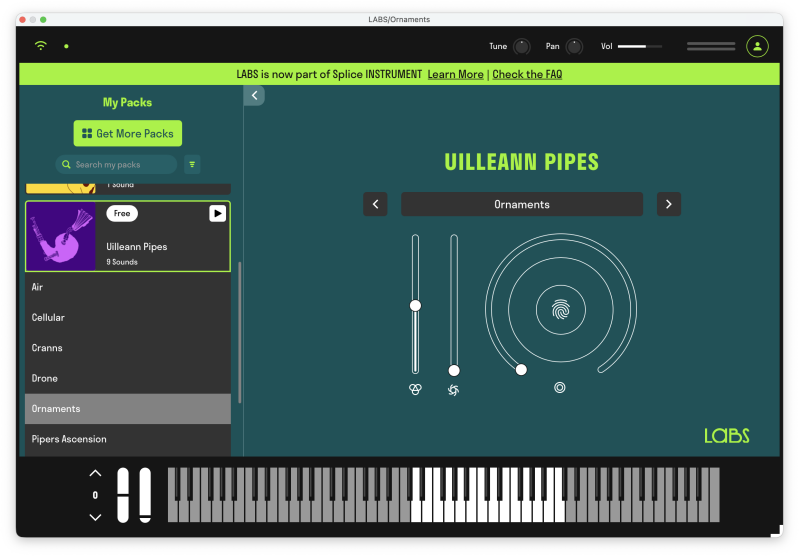
Spitfire LABS Uilleann pipes plugin including different articulations.
👇🏻Click below to hear the Uilleann pipes👇🏻
Foley workshops and ADR
Throughout the process of the project, numerous days were spent in the studios gathering foley recordings in order to ensure we had more sounds than necessary, building a library that can be utilised where appropriate. The first sessions were focused on character movements, so full attention was paid to the particular tonalities, materials and weight of the impacts for the footsteps made by each character. In addition to these considerations, after discussion about a point of reference, a significant inspiration for the foley and ADR recordings was taken from the animated movie Brave, primarily due to it's environmental setting being so similar to the visuals and terrain in Spring.
To be certain there was no undesirable room noise or reflections, an optimal sized and adequately acoustically treated space was booked for the recordings, additionally, using a Rode NTG2 shotgun mic. For the girl, we used a mixture of recordings with small wooden sticks hitting different materials like grass, gravel and rocks for the higher frequency content of the steps and to provide a layer of low end, impactful weight, a pair of heavy boots worn by Cian stepping on those same materials was also captured. Close attention to details in the film were crucial in creating these elements, for example even in the moments of interaction between the girl and her dog, we had bought a pack of digestive biscuits, brought two together and snapped them on time with the scene for further immersion in the piece. Since the sound of humans eating isn't quite the same as it is when a dog is munching on some treats, Allan made the decision to record his own dogs eating some crunchy biscuits which then became the dog in the scene. Finally, since it is an all male crew, Allan offered the vocalisations of his partner which were added as an ADR addition to the project.
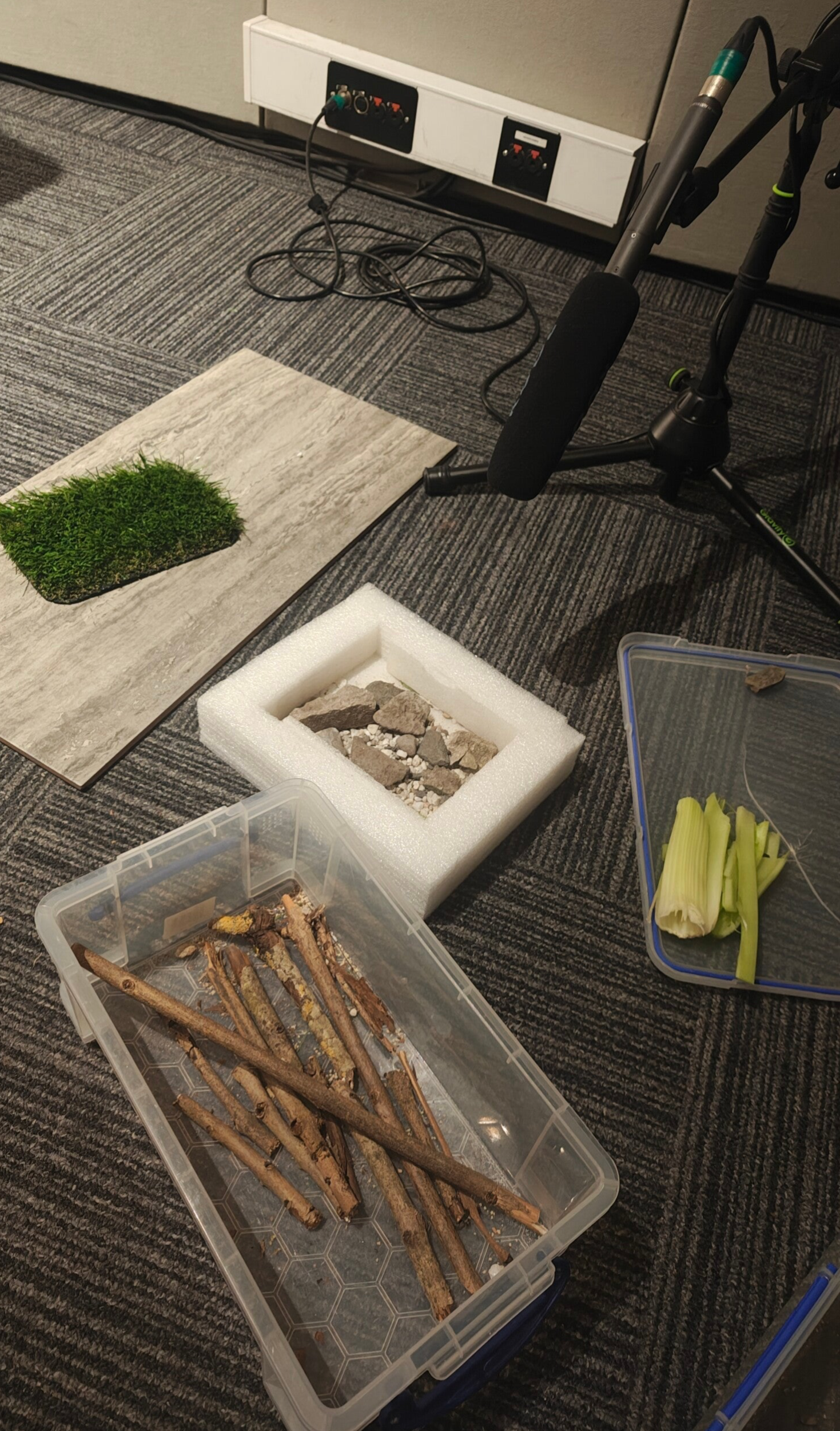
Foley workshop in full swing.
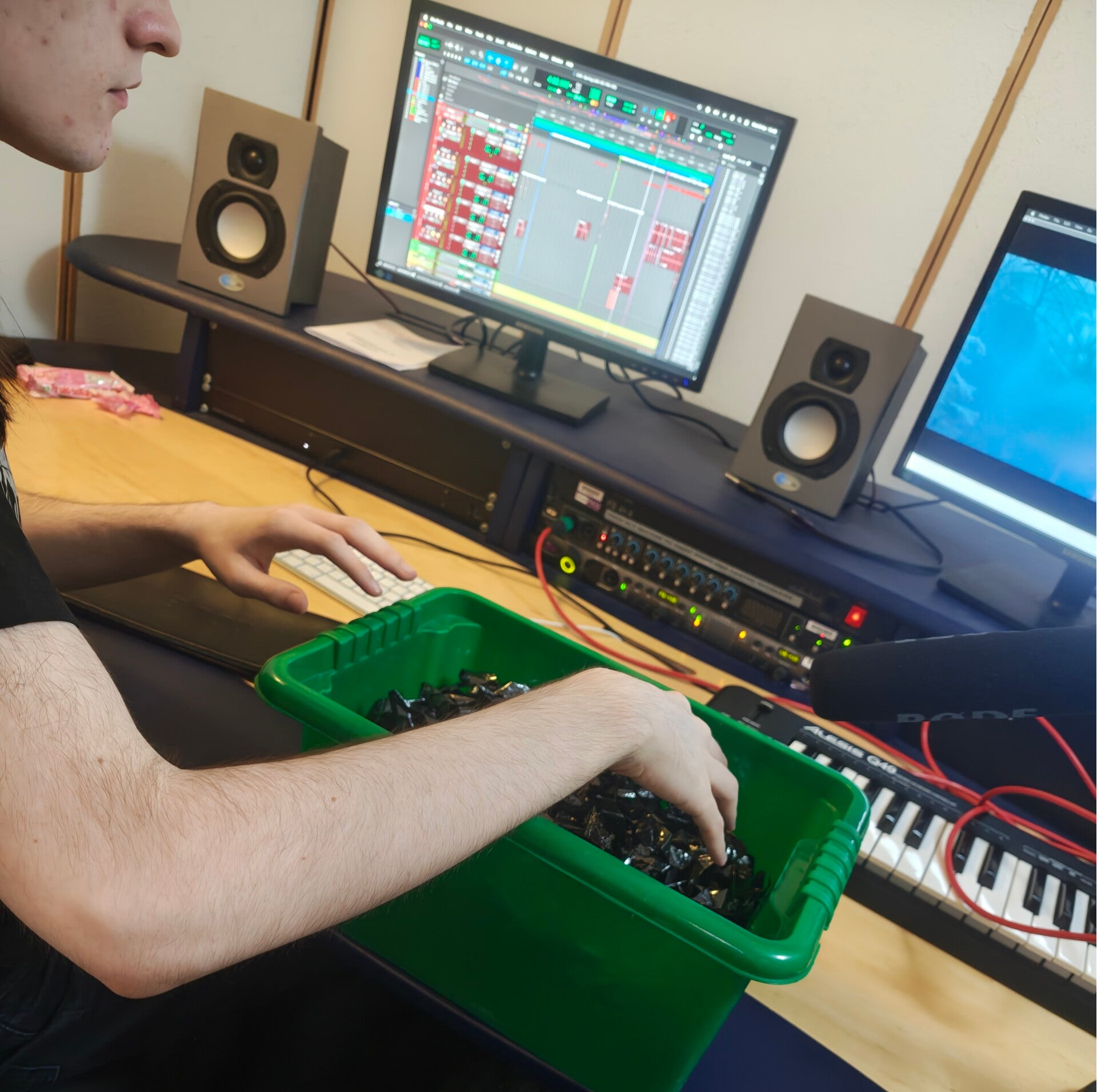
Cian recording crispy layers for the creatures movements with reel tape.
In the next workshop meeting, movements and impacts were still the primary focus, mostly the girls staff and the mysterious tree creatures alongside other environmental sounds. As the creature rises from its slumber, the trees emerge from the earth with a crunch recorded with cabbage and rubbing of rocks in a dish of gravel, once in full life, the branches on screen begin to snap and break. The sound for this was accomplished by snapping vegetables and layering those recordings with several wooden sticks scraping together. Once we had all the footsteps, movements and protagonist vocalisations, primary objectives for the workshops were placed on gathering vocals for the creature. We wanted the monster to sound alien, but still from earth as confusing as that may be, so the idea of creating three separate tracks and recording some growls with different tonalities to layer alongside the SFX already in place was brought to the table. This worked out perfectly, exactly as we had planned and is one of the strongest elements of the ADR recordings in the project.
👇🏻Click below to hear the creature growls we recorded👇🏻
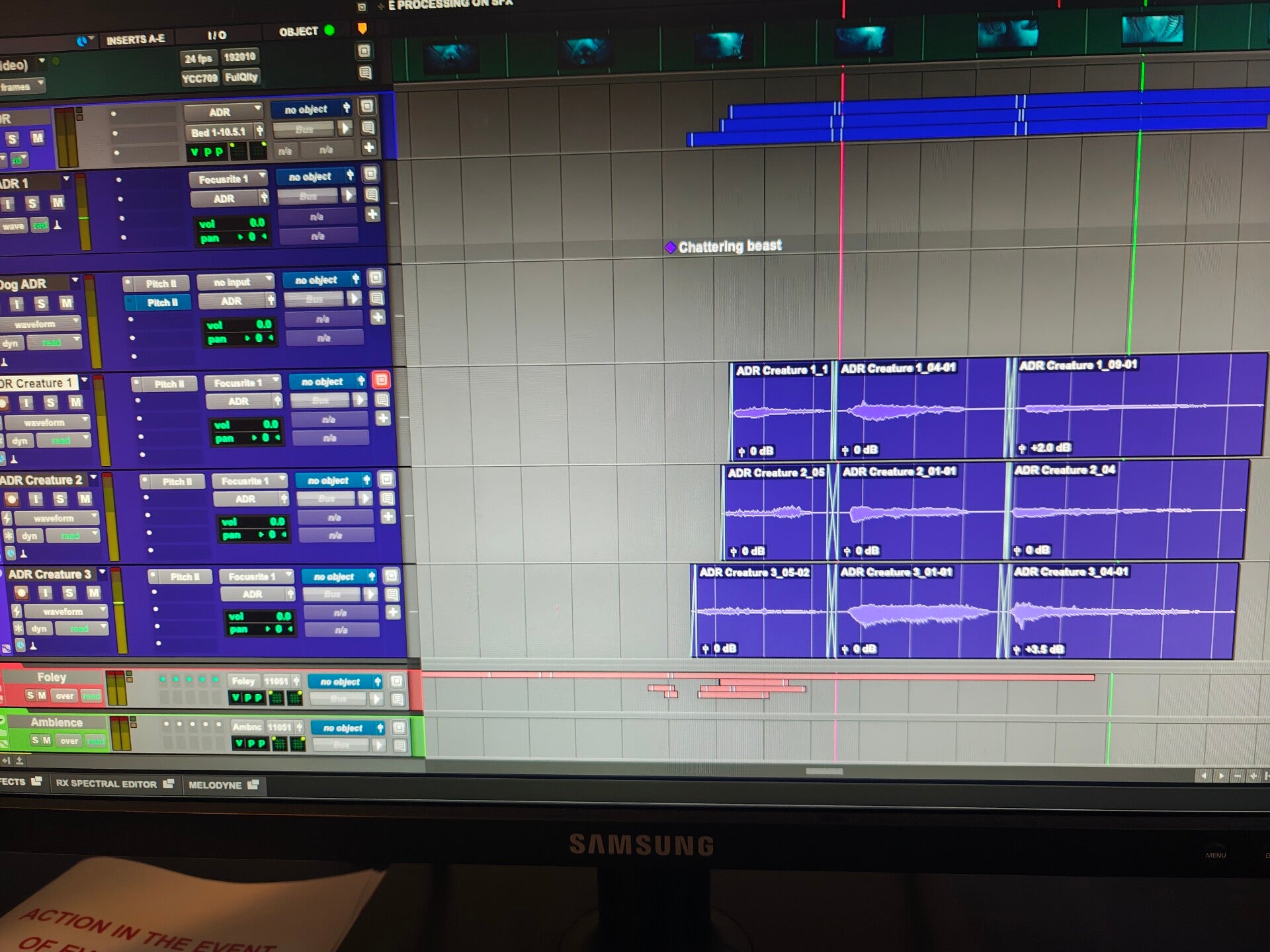
Photo of the session which includes the monster vocalisations.
SFX
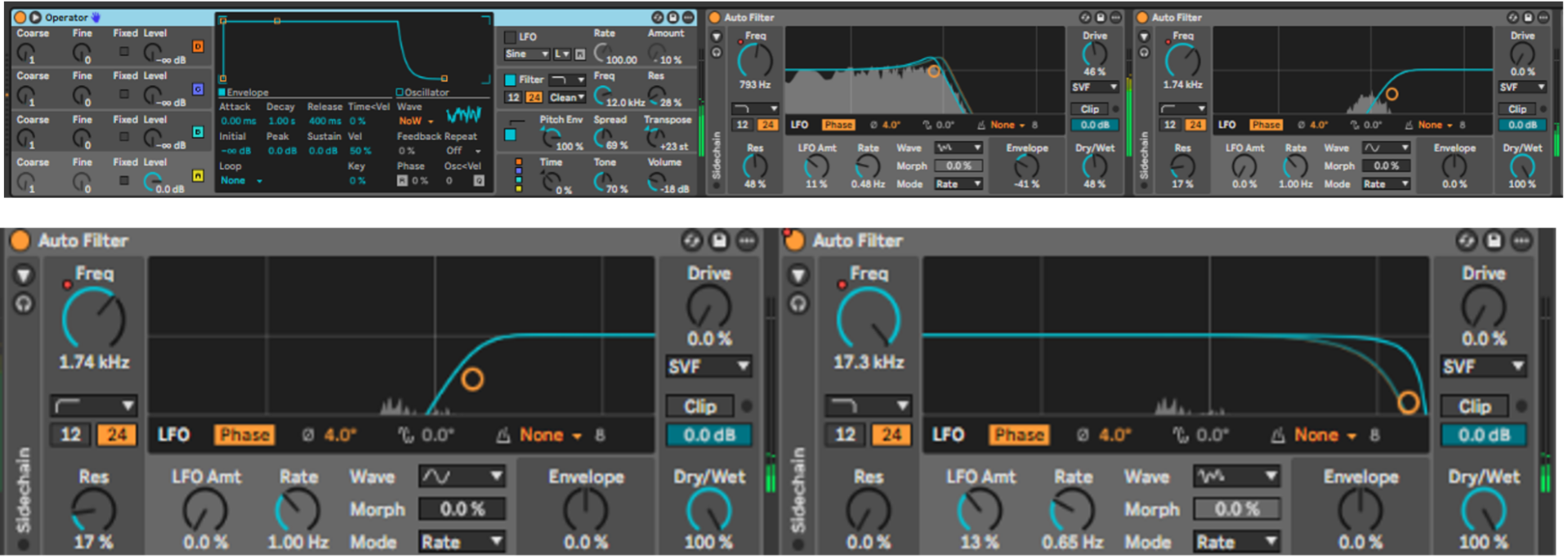
In SFX, diegetic sound is paired with a creative expansion of image. Developing the presented ‘water drop’ visual cue with magical intonation expands directive feeling. In developing the diegetic, feelings of wonder, magic and amazement suspend atmosphere by developing the physical. The water drop’s impact appears to trigger a magical response from the item struck. To capture this developing arrangement, short attack and long sustain in musical elements paired with layered ‘whoosh’ effects develop the sense of magic and wonder as scene changes and audience is left in suspense for coming implementation. The ‘Whoosh’ sounds are formed from manipulated cymbal samples, filter sweeps and volume automation correct original musical sound and create the dynamic fades. We learn the role of the impacted material as its magic is awoken by an incidental water drop. Water drop sound is formed from combination of library samples and synthesis. Furthermore, reverb tails develop the intended fade out effect and enhance the feeling of wonder.
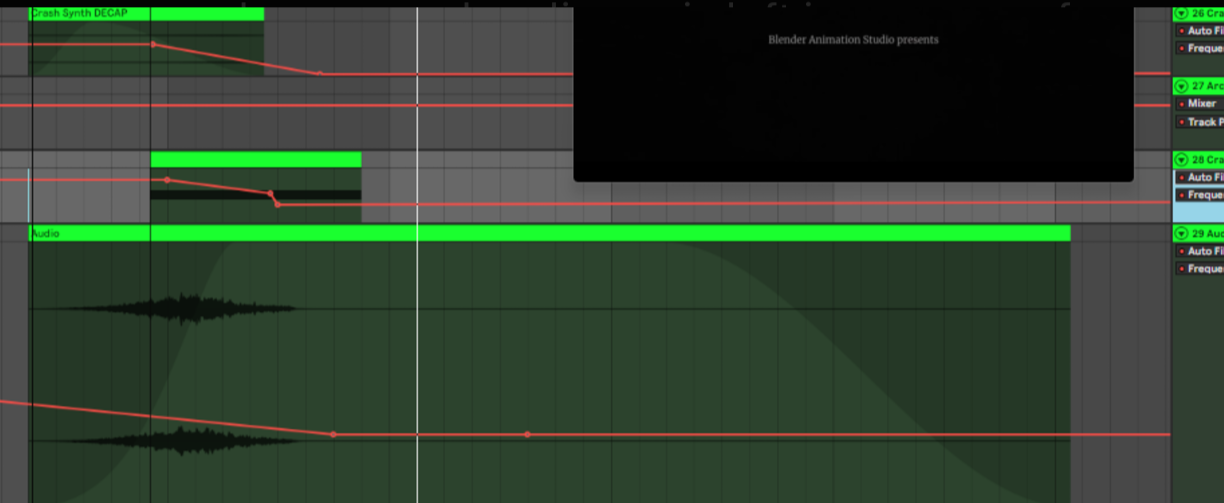
Water drop FX synthesis screenshot.
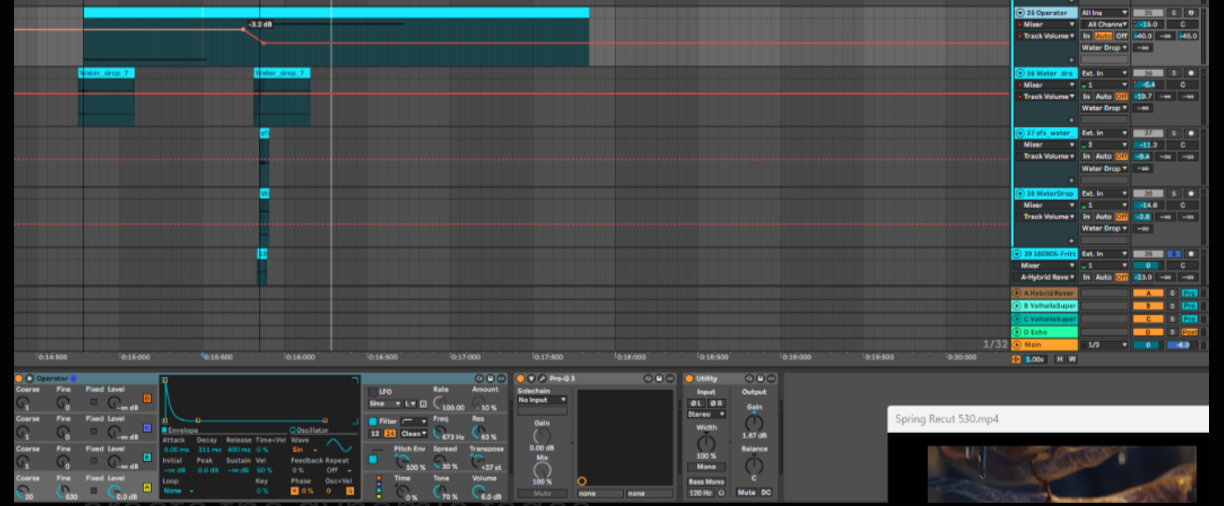
"Whoosh" FX synthesis screenshot.
Environmental SFX Cues
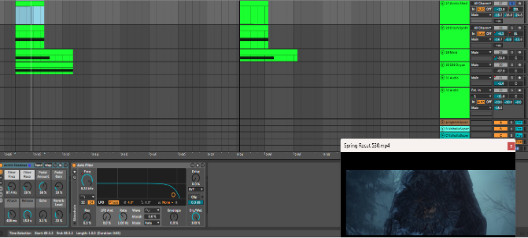
Wind ambience is synthesised from pink noise and filter automation, then layered within the mix. Filter modulation is automated with Ableton’s Auto Filter LFO, creating realistic diversity in frequency content and dynamics. Furthermore, this instance of wind ambience is automated by scene change into the dark forest at 1:20. The previous picture of blue skies is consumed by desolation as visuals descend to grey. Automation of wind ambience serves to partner physical environmental change where wind subsides due to enclosure of the forest but also depicts change in atmosphere where blue beauty is replaced with a grey uncertainty. Wind ambience then transforms into sub-frequency droning which encloses perception, absorbing life from the outside and focuses attention towards forthcoming unsettle. The low-end rumble of the previous wind ambience subsides when mood changes from recurrence of magical object to indicate a new found hope as the magical stone appears as light at the end of the forest. Again, the feeling of magic and wonder is created in musical adaptation of long sustain high-end keys. Sounds synthesised with relatively long attack subtly introduce the new magical element.
Wind/Ambience SFX cue synthesis and filtering.
Obelisk/Stone SFX cue synthesis and filtering.
Creature SFX
Impact from rock sample imitates image. Sustained rumble predicts the forthcoming significance of the impact as the ground shakes, visuals pan towards the sky in anticipation. The rock, itself, requires a large sound of impact as the ground shakes as a result. Similar magical elements are characterised through existing motifs of musical application. The tail of the impact vocalises impending anticipation, reverb and delay are used to characterise the environment as well as anticipation. Low-end droning accompanies the anticipated awakening of the beast, influenced by the sci-fi feel of the creature in the sky, further establishing an atmosphere conveying fear and ambiguity. Furthermore, the physical scale of the beast requires an intense rumble as it approaches our view. The undescriptive nature of droning depicts the unknown characteristics of the beast as it first appears out of view and droning raises the intensity as the monster approaches, yet grasps obscurity as characteristics are yet veiled.
Vocal interpretation is synthesised in reflection of influence from sci-fi genres. Reverb and delay are used to vocalise the recently opened space and presence of the beast and to communicate sonic environments whilst expressing anticipation. A pulsing effect is created through wavetable modulation to introduce suspense and anticipation and the SFX layer of the monster’s growl is synthesised through blending an animal growl sample and vocal recordings. Again, ambiguity is preferred over clarity as monster is left uninterpreted. At this stage, suspense derives from the unknown, therefore audio conveys similar obscured information, allowing audience interpretation.
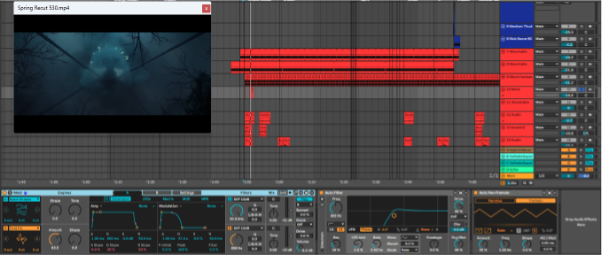
Beast awakening SFX synthesis and sampling.
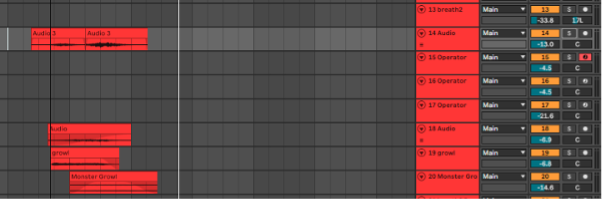
Beast Growl SFX synthesis and sampling.
Ambience
The Ambience serves as the backdrop that places the viewer in the space, whilst subtle, it is the foundation that sells the SFX and foley. A good analogy to help better understand it is that of the artist priming a canvas before building layers of paint to have a subtle hue underneath, informing the colours built on top of it.
Mountain Soundscape (0:22-1:22)
As “Spring” starts, we are introduced to a mountainous landscape, which upon first viewing immediately called for wind. The problem conveying wind is that it is not easily recorded, often overloading a microphone capsule resulting in a clipped recording. To work around this, Charlie used various noise tracks being swept with a low pass filter coupled with different layers of whistling just gently faded in. This achieved a wind sound however, it still had a synthetic feel to it, so to remedy this, the implementation of another layer of recorded ambience was required to mask the artificial sound of the previous process.
👇🏻Click below to hear the Mountain Soundscape ambience👇🏻
Barren Forest Soundscape (0:00-0:22) (1:22-5:31)
As the landscape shifts so does the required ambience but more than this, Charlie aimed to follow the narrative by creating an unsettling ambience. To do this, a pink noise low pass filtered from around 500 Hz at 6dB/Octave was produced and gently layered in a forest ambience with creeks in the background. The aim here was to replicate the ambience of a cave more than a forest as it shares many of the same qualities such as the lower light level and temperature. At 2:30 the ambience fades out as that is when we are first introduced to the creature. The decision to do this was because subtly removing the ambience would be something the audience wouldn’t notice but would enhance the rise in tension as it becomes eerily quiet and when the sense of space disappears, the distance to the creature feels that much closer. This same forest ambience was then reintroduced after the intense chase scene to return listeners to the space.
👇🏻Click below to hear the Barren Forest ambience👇🏻
Director review and discussions
At the middle stage of our project, the director brought us all together and provided feedback on our progress. As previously stated and agreed through a team meeting, the composition had a moment where instrumentation choices were suggested to be altered to convey a more fitting sense of emotion for the scene, this was taken on board and implemented immediately. The change was to remove the Irish Harp and bring the chord progression to a lower tone to provide the sense of dread that accompanied the mysterious valley. The thought process to include a a layer with a high-end Violin note was directly inspired by the first introduction to a zone named Liurnia of the Lakes in the open world RPG video game Elden Ring, where the mysterious lake is viewed atop a cliff after leaving the previous area, similar to the view we have in the clip in this project. Further feedback provided was that the ambience had some sections where you could hear birds singing when the character was in the dark valley under the fog when there was clearly no indication of any life in general. This was remedied in the next step and our key takeaway from the review was to continue working on the ambience audio and consider how crucial it may be in gluing the rest of the piece together with each particular scene as well as it's accuracy in replicating the visual environment.
Ali Murray - Feedback Session
We also had the opportunity to showcase our progress to a successful, experienced sound designer in Ali Murray and the feedback given by him was invaluable to our process moving forward. He suggested that we took the realism out of some sections and enhanced the idea that it was an animated piece by exaggerating several sounds. Through discussion with Ali we all came up with the idea of creating a short pad to act as a magical aura for the Stone Obelisk in the valley scene to increase the sense of foreign mystery which was then completed and implemented following the discussion using a MIDI instrument called CUBE on Ableton Live. Finally, we spoke about some of the problems we were expecting to face during the mixing process and Ali gave us great advice on how to remedy these issues should they arise. At this point we were very happy and comfortable with our progress.
👇🏻Click below to hear the Stone Obelisk Aura motif👇🏻
After our meeting we spent time reviewing our work again independently and creating markers in the session timeline to note moments in the piece which would require either more work, layers, fresh recordings due to the lower quality takes or further dialogue/ADR parts we have overlooked due to full focus being on other elements. This proved to be incredibly useful and kept us right on track and allowed us to progress into a plan for the next recording and mixing session.
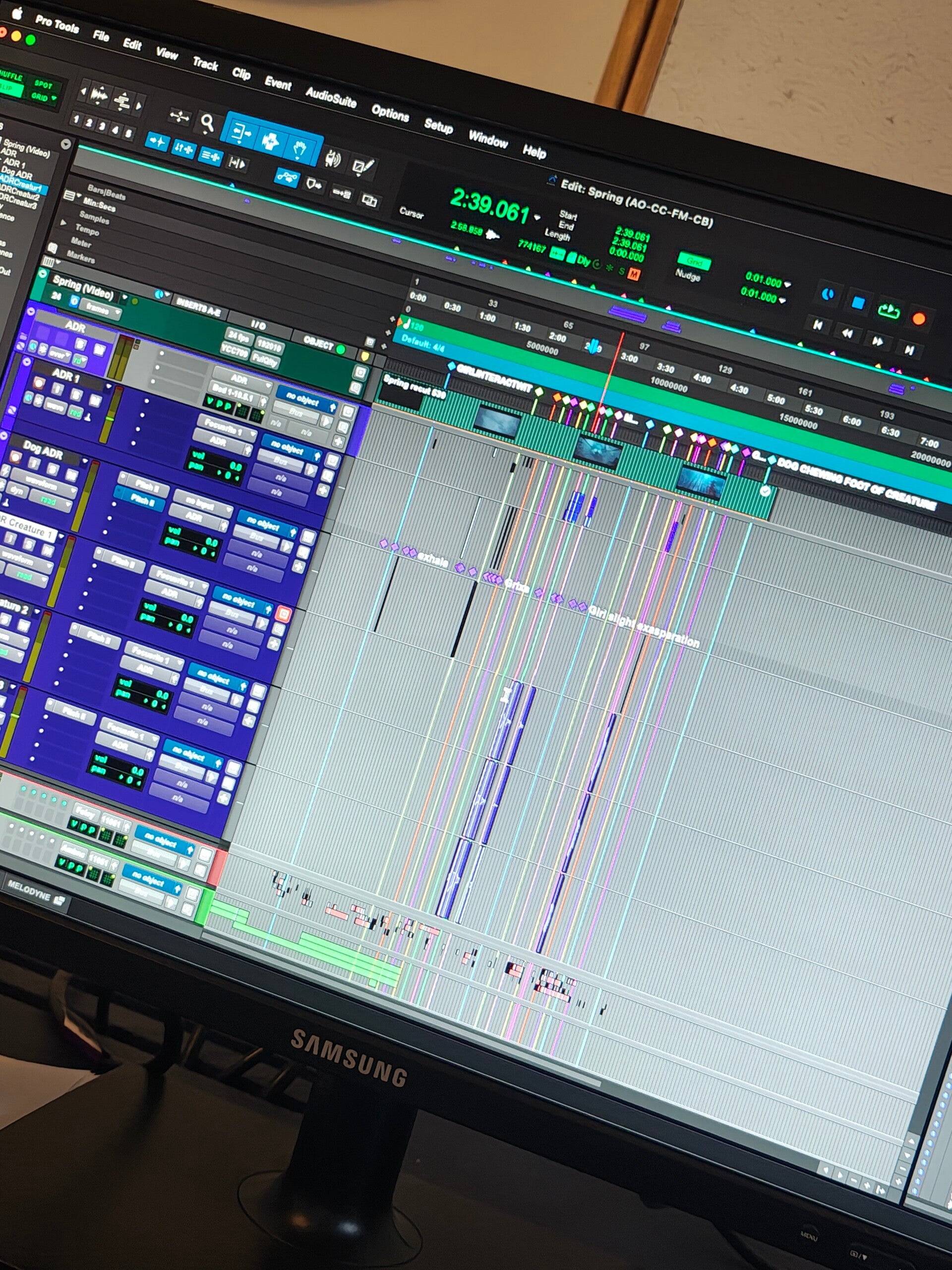
Abundance of timeline markers to provide information with additional sounds for implementation.
Dolby Atmos
Dolby Atmos is an immersive mixing technique which in our opinion creates the most accurate representation of binaural and 5.1 surround sound design. Before the project began, Allan organised a Dolby Atmos mixing plan where details were put together for intricate dynamic placement and static audio allocations to the mix bed. In the final weeks of the project, studio time was booked and Allan accompanied Cian in spending many hours intricately automating directional movements and panning to provide an immersive experience that places you in the film with auxiliary reverbs and other crucial processing plugins to create plenty of space for each sound to fit in the mix. For the processing of the creature growls and movements, the decision was made to create a stereo reverb auxiliary track and route both of them to the back left and right speakers. This even further enhanced the sense of immersion, spatial experience and produced a sound that portrays the sheer scale of the creature.
The LFE channel in the Dolby Atmos session was mostly dedicated to housing the creature and it's traversal through the forest and during the chase, although there were some moments where the girls staff thuds against the terrain that were routed into the channel, the idea behind this choice was to have the audience feel the staff hit the ground as though they are standing right beside the protagonist as she slams it down.
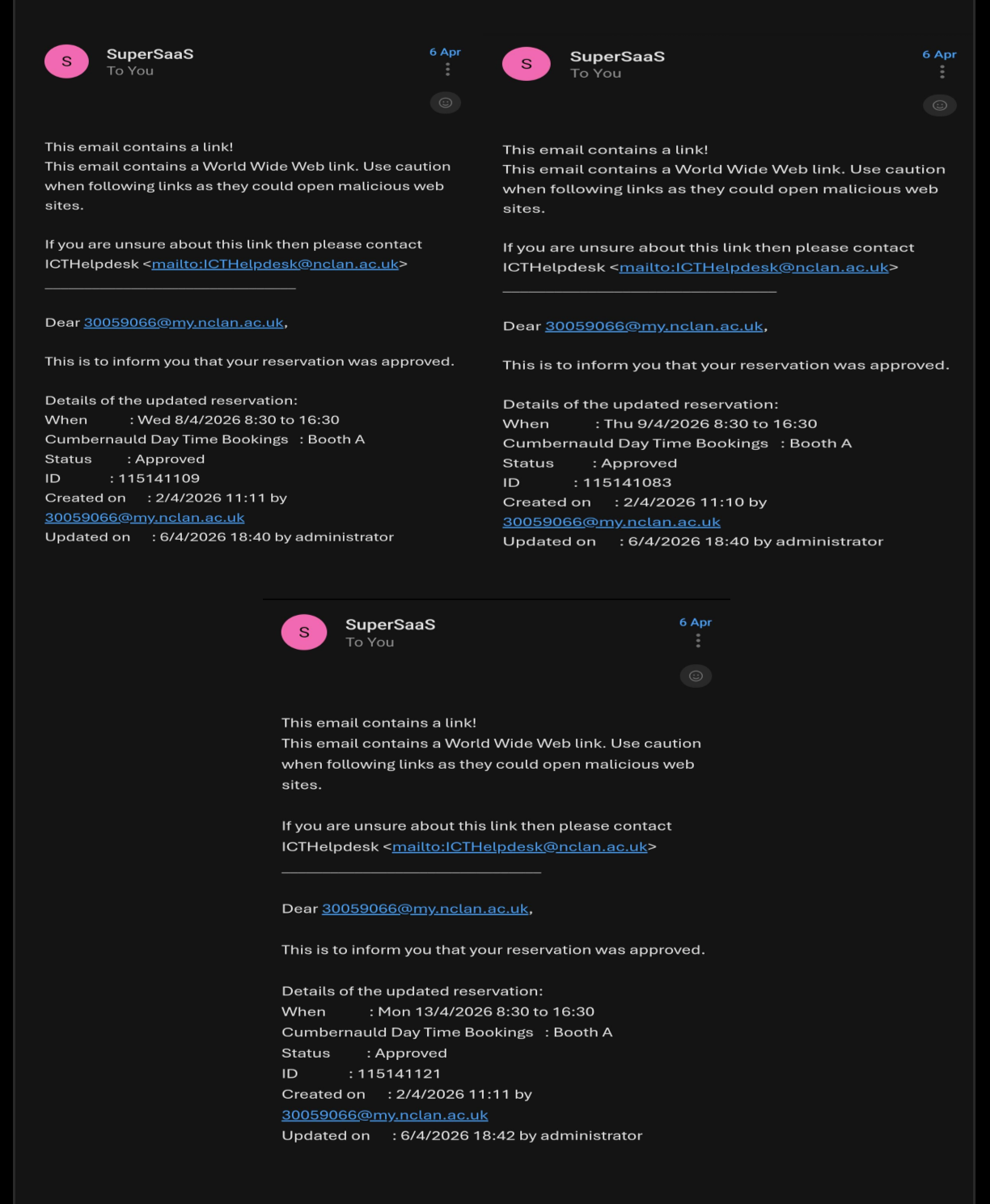
Confirmation screenshot the studio bookings for 5.1 mixing process.
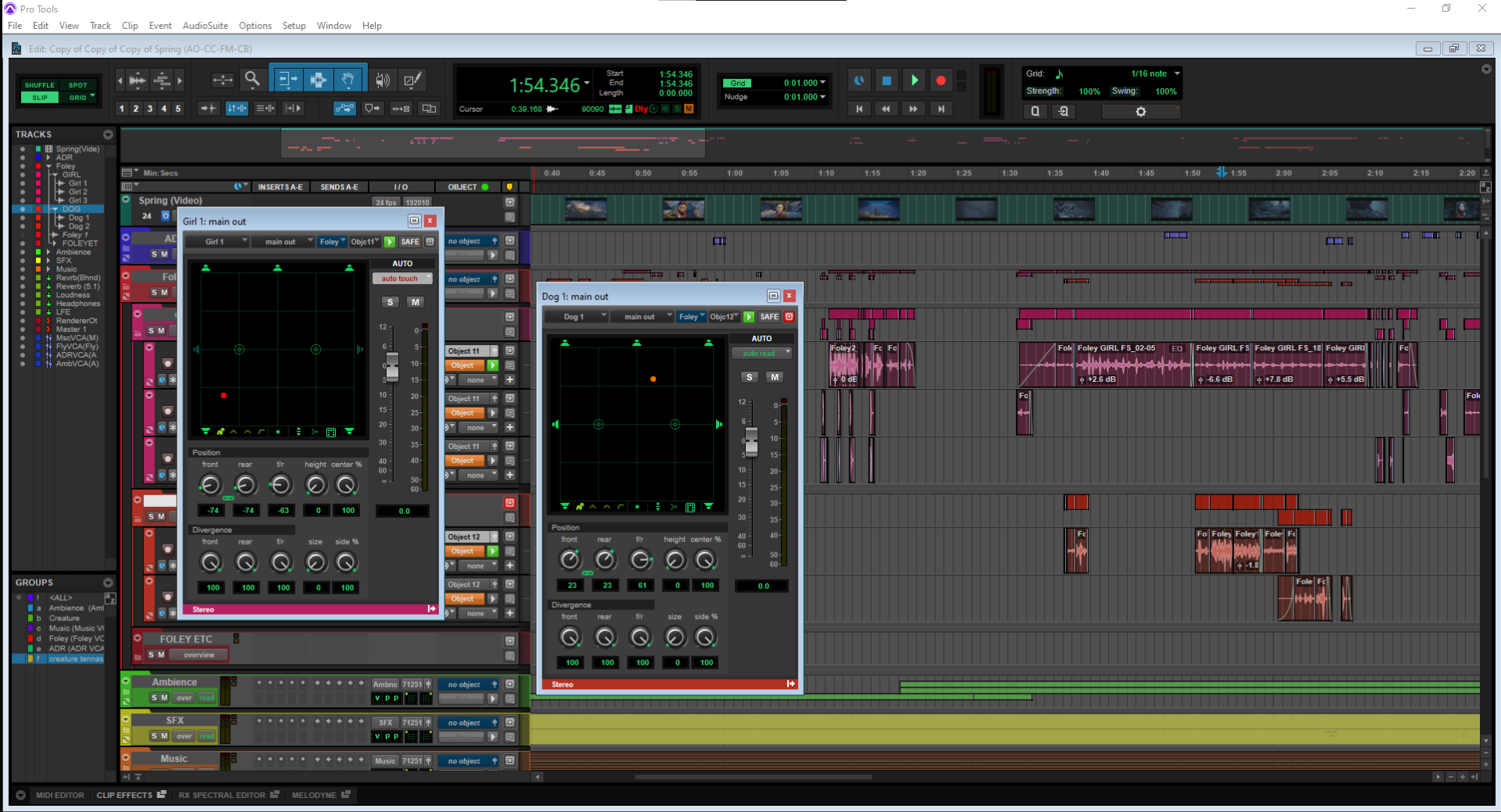
Dolby Atmos mix screenshot - Directionality for protagonist movements.
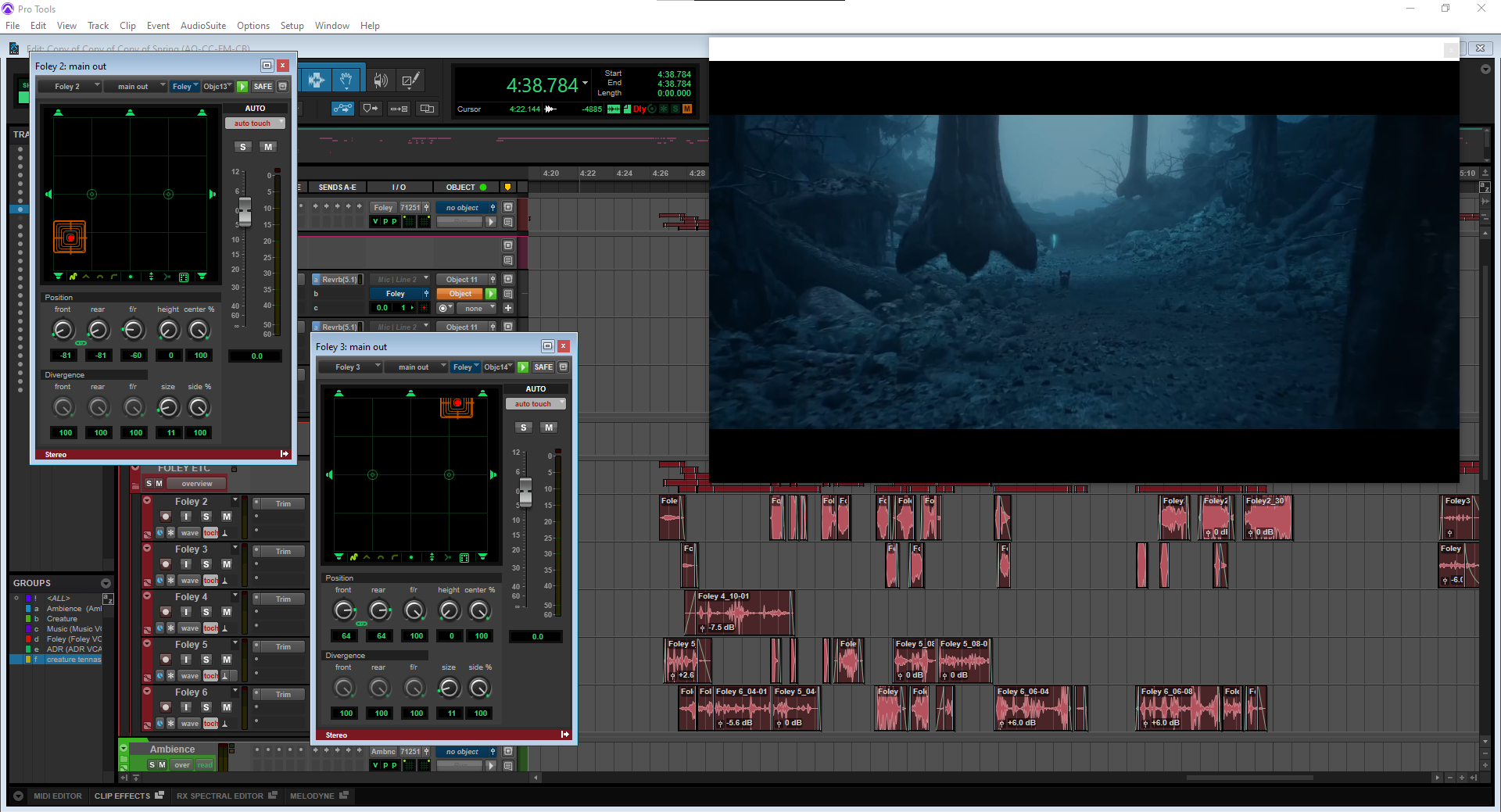
Dolby Atmos mix screenshot - Size automation for creature footsteps.
The Dolby Atmos renderer proved a significant help in ensuring that sound objects were panned correctly and moving within the 3D space as accurately as possible. Most moments in the piece which we assigned to objects were character movements and there are a few key moments such as in the middle of the chase where the objects travelled as though the audience could be immersed within the space, reinforcing our decision to mix in Dolby Atmos even further.
As an example, when he creatures roars, size automation was drawn to reflect it's size and it proved to be extremely effective in portraying the enormous scale of the monster.
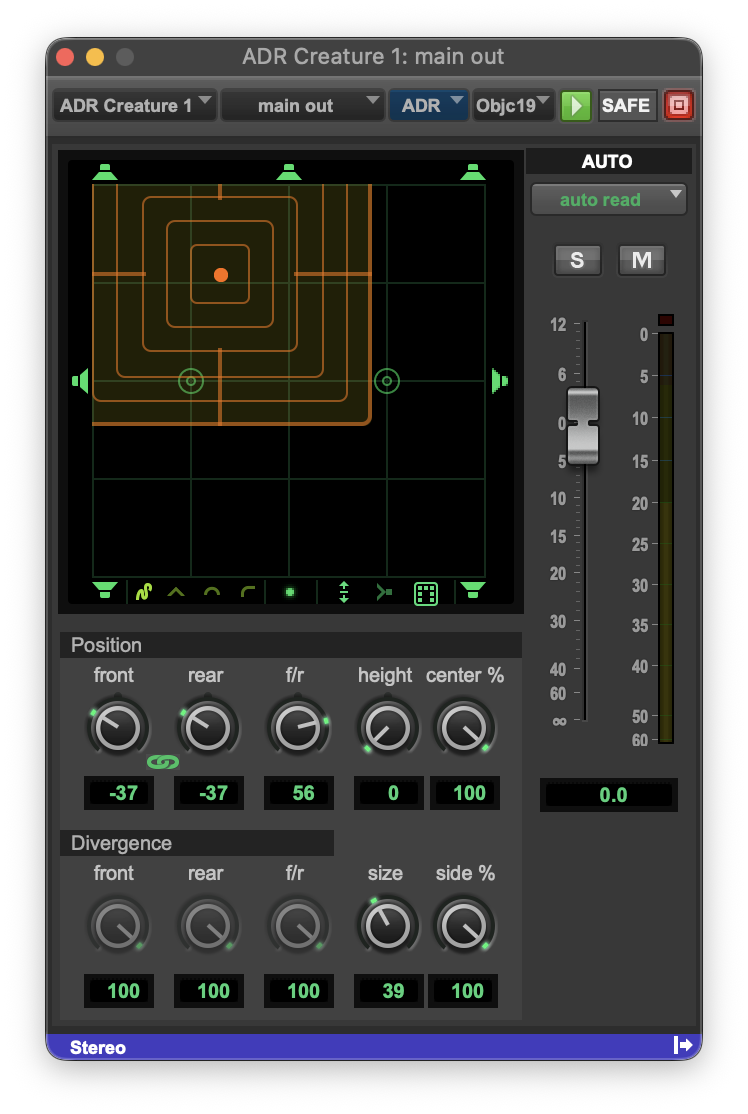
Size automation/panning for creature roar.
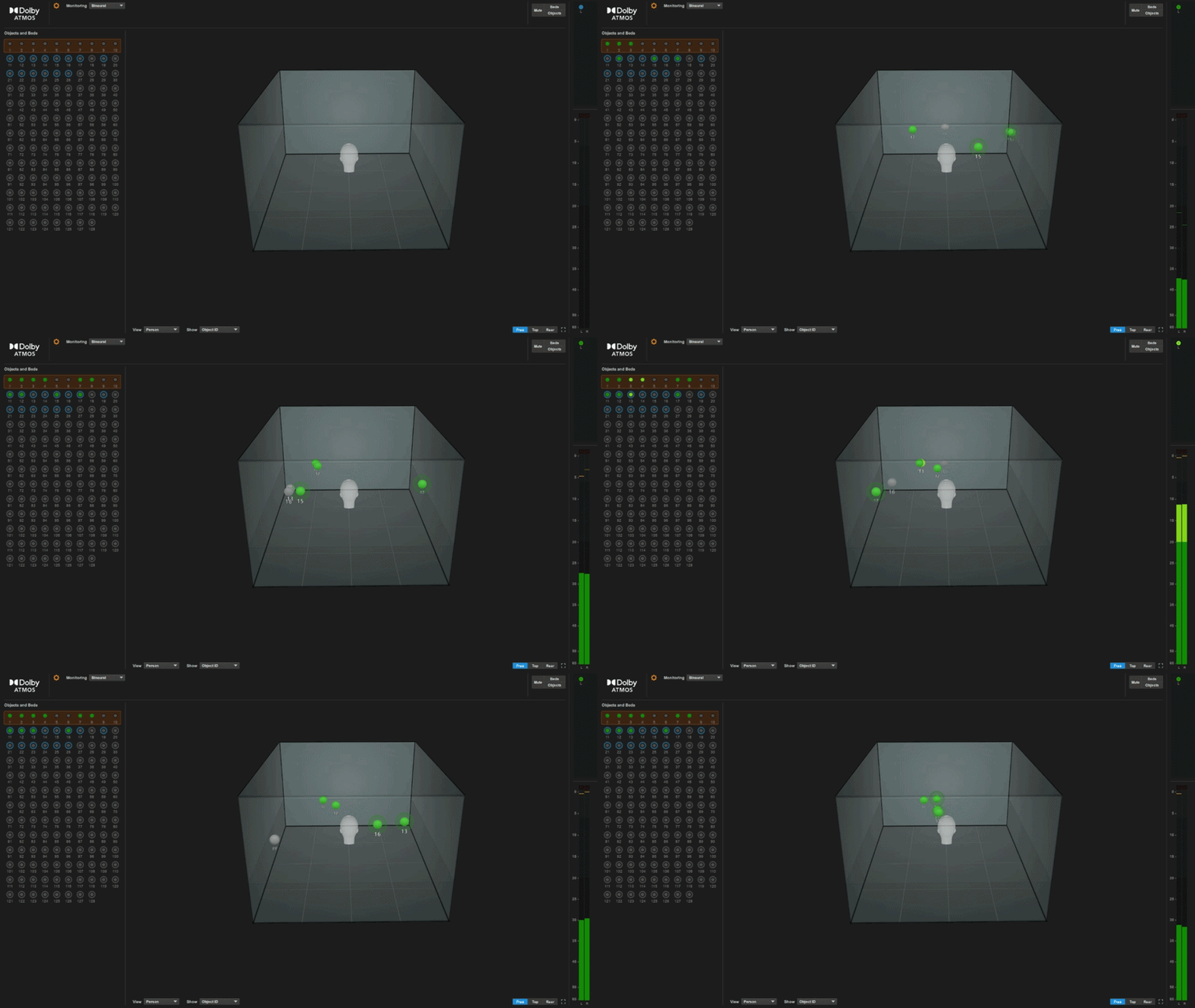
Dolby Atmos Renderer during chase scene.
The Final Cut
As the project developed, the focus shifted from capturing individual sounds to shaping how they interact within a space. Each layer, movement, and variation contributes to a wider sense of continuity, where no single element dominates, but all remain perceptually present. The final composition reflects this balance as our interpretation of the pacing and textures which accompany the visual aesthetics in the short film.
Issues encountered throughout the production of this project consisted of minor communication issues from time to time due to the various other projects each team member was juggling at the same time, however these were overcome very well through complete dedication to the project and in the end, our passion for audio post production prevailed.
This approach reinforced our decision to create the 5.1 mix in Dolby Atmos, allowing sounds to be treated as spatial elements rather than fixed positions and enabling a more fluid distribution of detail throughout the environment. Furthermore, by working within a 3D field, the relationships between elements could be defined by position and movement, enhancing the sense of immersion.
Upon reflection, the experience of crafting an audio production through our own interpretation to coincide with the elegance shown by the imagery in the video was creatively challenging as we were pushed to reconsider how we perceived sound in particular spaces, but ultimately wound up being substantially rewarding as the project drew to a close and all elements began to take glue together into a beautiful finished product.
👇🏻 Here is a link to the finished piece for your enjoyment 👇🏻